FHC President Vince Larkins in Footsteps to Freedom Documentary Highlighting Fla. Civil Rights Heroes William Larkins and Wilhelmina Jakes
- At February 06, 2014
- By fhfla
- In News
 0
0
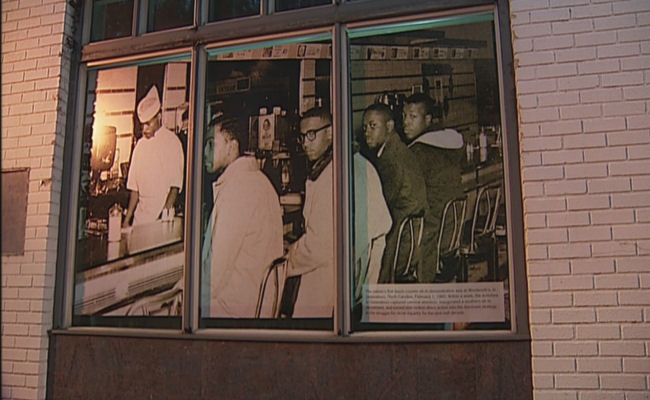
Last Friday night, more than 100 people experienced the première of “Footsteps to Freedom,” a city-produced documentary about civil rights struggles in Tallahassee. The production chronicles the creation of the Tallahassee-Leon County Civil Rights Heritage Walk, which honors more than 50 civil rights activists, including the aunt and uncle of Vince Larkins, Wilhelmina Jakes and Bill Larkins, who took part in the 1960s lunch counter sit-ins and the 1956 bus boycott and grew up in West Palm Beach.
To ensure the documentary is widely distributed throughout the community and beyond, the City is sharing the video online, on television, through the LeRoy Collins Leon County Public Library System and via the Leon County School District.
“This documentary tells a story that many in this community do not know,” Mayor John Marks said. “I can think of no better time than Black History Month to share these stories of courage and perseverance that demonstrate how far we’ve come as a community since these events occurred.”
Click on icon above to view VIDEO
MIAMI SUES THREE MAJOR BANKS FOR WHAT IT CALLS PREDATORY LENDING IN POOR NEIGHBORHOODS
- At December 21, 2013
- By fhfla
- In News
- 0
The City of Miami has sued three major banks for what is says has been a pattern and practice of predatory lending that has hurt the city’s coffers because of foreclosures and a drop in property tax revenues.
According to the lawsuits filed in federal court last week, Bank of America, CitiGroup, and Wells Fargo violated the Federal Fair Housing Act by issuing loans to minority residents in Miami under terms and conditions that were different than those for white borrowers on a routine basis since at least 2004.
“The goal here is to punish the banks for their practices and to recover for the city and its citizens a portion of as much of the damages as is possible to recover,” said city Commissioner Francis Suarez, who sponsored an ordinance earlier this year to pursue legal remedies against the banks.
Download Attachment:
CLICK HERE TO VIEW PRESS RELEASE AND COMPLAINTSREALTORS MOVES AHEAD OF FEDERAL LAW BY ADDING LGBT PROTECTION TO CODE OF ETHICS
- At November 17, 2013
- By fhfla
- In News
- 0

The country’s largest trade association is taking another big step toward acceptance within its ranks.
The National Association of Realtors (NAR) announced this week that it would amend its code of ethics to include language adding gender identity to its fair housing protections. The change, which was voted on by the membership, follows the group’s 2011 addition of sexual orientation to the list. The decision was made Monday by the NAR board of directors at the group’s annual meeting in San Francisco.
Click on the icon above for FULL STORY.
HUD, DEUTSCHE BANK SUBSIDIARY AGREE TO $12.1 MILLION SETTLEMENT OF LENDING DISCRIMINATION CLAIMS
- At November 07, 2013
- By fhfla
- In News
- 0
WASHINGTON – The U.S. Department of Housing and Urban Development (HUD) has announced that MortgageIT, Inc., an indirect subsidiary of Deutsche Bank, has agreed to pay $12.1 million under a Conciliation Agreement with HUD resolving allegations that the residential lender discriminated against African American and Hispanic borrowers seeking mortgage loans. HUD had alleged that the lender’s practices contributed to minority borrowers being charged higher Annual Percentage Rates (APRs) and fees than similarly-situated white borrowers, and denied minority applicants loans more often than similarly-situated white applicants.
The Fair Housing Act prohibits housing discrimination in mortgage lending and real estate-related transactions based on a person’s race, color, national origin, religion, sex, familial status and disability.
“It’s creditworthiness and ability to pay that matter when you apply for a loan, not your race or where you come from,” said Bryan Greene, HUD’s Acting Assistant Secretary for Fair Housing and Equal Opportunity. “This settlement reaffirms HUD’s commitment to ensuring that minorities have equal access to mortgage loan products and that lending institutions meet their obligations under the Fair Housing Act.”
This agreement is the result of a complaint that HUD’s Assistant Secretary for Fair Housing and Equal Opportunity filed against MortgageIT, alleging that the company discriminated against African American and Hispanic borrowers by underwriting, approving, purchasing, and securitizing mortgage loans in a manner that allowed pricing and denial disparities on the basis of race and national origin. A HUD review of MortgageIT’s 2007 and 2008 internal loan data alleged that African American and Hispanic borrowers paid APRs that were eight to ten basis points higher, on average than similarly-situated white borrowers. In addition, HUD alleged that African American borrowers were 65 percent and Hispanic borrowers 72 percent more likely to receive higher priced loans than similarly-situated white borrowers, African American and Hispanic borrowers also allegedly paid, on average, $707 and $906 more in fees, respectively. HUD also alleged that African-American applicants were 45 percent more likely to be denied a mortgage loan than similarly-situated white borrowers. Hispanic applicants were allegedly 35 percent more likely to be denied.
Under the terms of the agreement, MortgageIT will establish a $12.1 million fund to compensate borrowers nationwide who were unfairly been denied a loan or whose loans may have contained terms and conditions that violate the Fair Housing Act. Any funds remaining after all victims have been compensated will be distributed to qualified organizations that provide credit and housing counseling, financial literacy, and other related programs that assist African American and Hispanic potential, current, and former homeowners.
Persons who believe they have experienced discrimination may file a complaint by contacting HUD’s Office of Fair Housing and Equal Opportunity at (800) 669-9777 (voice) or (800) 927-9275 (TTY). Housing discrimination complaints may also be filed at www.hud.gov/fairhousing or by downloading HUD’s free housing discrimination mobile application, which can be accessed through Apple devices, such as the iPhone, iPad, and iPod Touch.
Bulldozing Homes and Civil Rights
- At November 06, 2013
- By fhfla
- In News
- 0
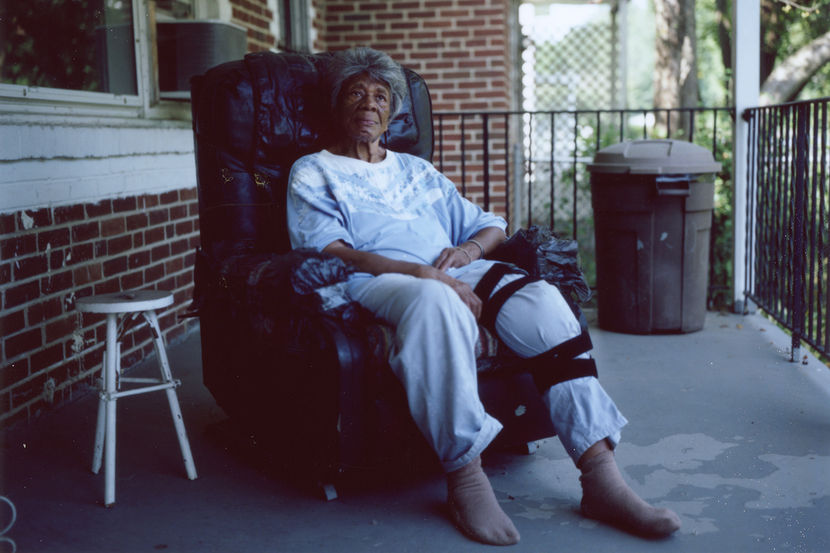
MOUNT HOLLY, New Jersey – It felt like an earthquake. Nancy Lopez was making breakfast when machines started tearing into the semi-attached house next door, ripping it to pieces and rattling the tiles off her bathroom wall.
“I thought that my house wasn’t gonna stay up,” Lopez said. “That was the worst day of my life.”
Lopez, who moved here in 1987, is one of the few remaining residents of Mount Holly Gardens, a neighborhood that no longer really exists but could fundamentally reshape civil rights law.
In 2003, leaders of this small township decided that crime in the Gardens had made the neighborhood–home to many black and Latino families–irredeemable. They devised a plan to buy the aging homes, raze them and replace them with higher-end housing the residents couldn’t afford.
Neighbors resisted, banded together as Mount Holly Gardens Citizens in Action and sued.
In court, they challenged the township’s designation of the neighborhood as blighted and accused Mount Holly of discriminating against residents on the basis of race.
Even if the discrimination wasn’t intentional, they said, the redevelopment project would have a disparate impact on the township’s only neighborhood where blacks and Latinos are the majority, destroying their hard earned homes.
The township denies that race had anything to do with the decision, saying that it was a last ditch effort to rid Mount Holly of crime and improve its economy. More than that, they say, the redevelopment was in the best interest of Gardens residents themselves, even if they didn’t realize it.
“We had to do something to save the people from that neighborhood,” said a former township official who would only talk on the condition of anonymity because of the ongoing litigation. “That’s the reason we did it. It would have been discrimination not to do anything.”
Click on the picture above for the FULL STORY