Black Homeowners Face Discrimination in Appraisals
- At September 01, 2020
- By fhfla
- In News
 0
0
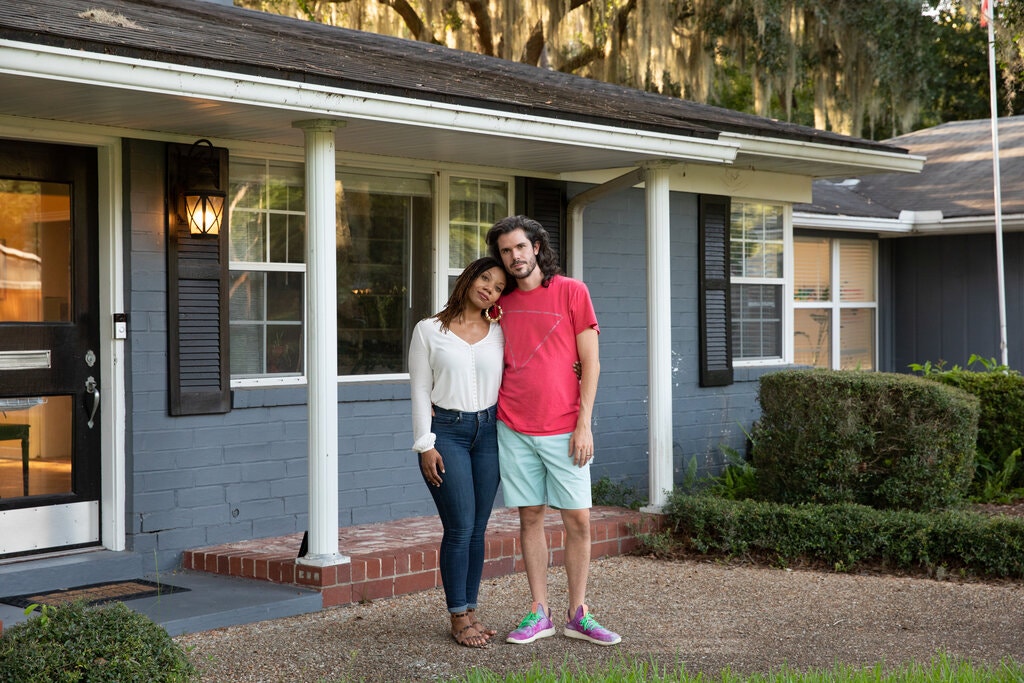
Abena and Alex Horton wanted to take advantage of low home-refinance rates brought on by the coronavirus crisis. So in June, they took the first step in that process, welcoming a home appraiser into their four-bedroom, four-bath ranch-style house in Jacksonville, Fla.
The Hortons live just minutes from the Ortega River, in a predominantly white neighborhood of 1950s homes that tend to sell for $350,000 to $550,000. They had expected their home to appraise for around $450,000, but the appraiser felt differently, assigning a value of $330,000. Ms. Horton, who is Black, immediately suspected discrimination.
The couple’s bank agreed that the value was off and ordered a second appraisal. But before the new appraiser could arrive, Ms. Horton, a lawyer, began an experiment: She took all family photos off the mantle. Instead, she hung up a series of oil paintings of Mr. Horton, who is white, and his grandparents that had been in storage. Books by Zora Neale Hurston and Toni Morrison were taken off the shelves, and holiday photo cards sent by friends were edited so that only those showing white families were left on display. On the day of the appraisal, Ms. Horton took the couple’s 6-year-old son on a shopping trip to Target, and left Mr. Horton alone at home to answer the door.
The new appraiser gave their home a value of $465,000 — a more than 40 percent increase from the first appraisal.
Race and housing policy have long been intertwined in the United States. Black Americans consistently struggle more than their white counterparts to be approved for home loans, and the specter of redlining — a practice that denied mortgages to people of color in certain neighborhoods — continues to drive down home values in Black neighborhoods.
Even in mixed-race and predominantly white neighborhoods, Black homeowners say, their homes are consistently appraised for less than those of their neighbors, stymieing their path toward building equity and further perpetuating income equality in the United States.
Home appraisers are bound by the Fair Housing Act of 1968 to not discriminate based on race, religion, national origin or gender. Appraisers can lose their license or even face prison time if they’re found to produce discriminatory appraisals. Title XI of the Financial Institutions Reform, Recovery and Enforcement Act, enacted in 1989, also binds appraisers to a standard of unbiased ethics and performance.
“My heart kind of broke,” Ms. Horton said. “I know what the issue was. And I knew what we needed to do to fix it, because in the Black community, it’s just common knowledge that you take your pictures down when you’re selling the house. But I didn’t think I had to worry about that with an appraisal.”
Appraisals, by nature, are subjective. And discrimination, particularly the subconscious biases and microaggressions that have risen to the fore in white America this summer following the death of George Floyd, is notoriously difficult to pinpoint.
Ms. Horton shared her experiment in a widely circulated Facebook post, earning 25,000 shares and more than 2,000 comments, many of which came from Black homeowners and carried the same message: This also happened to me.
In each comment, a repeated theme: Home appraisers, who work under codes of ethics but with little regulation and oversight, are often all that stands between the accumulation of home equity and the destruction of it for Black Americans.

Credit…Monica Jorge for The New York Times
After the first appraisal came up short on his house in an affluent, racially mixed suburb of Hartford, Conn., Stephen Richmond, an aerospace engineer, took down family photos and posters for Black movies and had a white neighbor stand in for him on a second appraisal. He was hoping to refinance; with the second report, he saw his home’s value go up $40,000 from the initial appraisal just a few weeks earlier.
In 2000, the American actor and comedian D.L. Hughley had an appraisal on his home in the Montevista Estates neighborhood of West Hills, a primarily white area in the San Fernando Valley in Los Angeles. Despite a steady uptick in the housing market and the addition of a pool and new hardwood floors, the house was appraised for nearly what he had bought it for three years earlier — $500,000.
In Mr. Hughley’s case, his bank flagged the report.
“They were like, this has to be some kind of mistake because in order for your house to have come in this low, it would have to be in some level of disrepair,” Mr. Hughley said.
The bank ordered a new appraisal, which came back $160,000 higher, and Mr. Hughley went on to sell the home for $770,000.
Mr. Hughley talks about the experience in his book, “Surrender, White People!”, a satirical look at white supremacy, which was published in June by Harper Collins and examines racial inequality in the United States across education, health care and the housing market.
“People always tell us to pull ourselves up by our bootstraps. But what if you remove the straps?” he said. “You’re invested in the American dream, you have capital, you have a chip in the game. And the fact that somebody could summarily minimize my wealth just because of a bias, it seemed crazy to me.”
In response to the coronavirus pandemic, a federal ruling issued in March allowed appraisals for homes that were being sold to be done remotely in certain circumstances, temporarily pausing the need for interior home inspections. Those looking to refinance, however, still must complete an in-person appraisal.
In Mr. Hughley’s case, the appraiser was fired. Ms. Horton has filed a complaint with the Department of Housing and Urban Development; when contacted about her case, HUD said it had been assigned to the Jacksonville Human Rights Commission. The agency added that it receives a handful of similar complaints each year.
In 2018, researchers from Gallup and the Brookings Institution published a report on the widespread devaluation of Black-owned property in the United States, which they discussed in a 2019 hearing before the House Financial Services Subcommittee. The report found that a home in a majority Black neighborhood is likely to be valued for 23 percent less than a near-identical home in a majority-white neighborhood; it also determined this devaluation costs Black homeowners $156 billion in cumulative losses.
Many appraisers, both during the hearing and in the weeks after, defended their practice, noting that it’s their job to report on local market conditions, not set them.
“Is there a problem with poor and underserved communities in the United States? Yes. Is it the appraisal profession’s fault? No,” wrote Maureen Sweeney, a Chicago-based appraiser in a letter to the house subcommittee following the hearing. “It’s like blaming the canary for the bad air in the coal mine, or blaming the mirror for your bad hair day. Appraisers reflect the market; we do not create it.”
But what about a Black homeowner in a white neighborhood whose property is appraised for less than his neighbor’s? Whether appraisers are devaluing Black homes or entire Black neighborhoods, the core issue is the same, said Andre Perry, one of the writers of the Brookings Institution report and the author of “Know Your Price: Valuing Black Lives and Property in America’s Black Cities.”
“We still see Black people as risky,” Mr. Perry said. “White appraisers carry the same attitudes and beliefs of white America — the same attitudes that compelled Derek Chauvin to kneel casually on the neck of George Floyd are shared by other professionals in other fields. How does that choking out of America look in the appraisal industry? Through very low appraisals,” he said.
By
Courtesy of N.Y. Times
FHFA and FHA Extend Foreclosure and REO Eviction Moratoriums to end of 2020
- At August 28, 2020
- By fhfla
- In News
- 0

Foreclosure moratorium applies to Enterprise-backed mortgages; eviction moratorium applies to Enterprise-owned properties
Washington, D.C. – In order to help borrowers at risk of losing their home due to the coronavirus national emergency, the Federal Housing Finance Agency (FHFA) has announced that Fannie Mae and Freddie Mac (the Enterprises) will extend the moratoriums on single-family foreclosures and real estate owned (REO) evictions until at least December 31, 2020. The foreclosure moratorium applies to Enterprise-backed, single-family mortgages only. The REO eviction moratorium applies to properties that have been acquired by an Enterprise through foreclosure or deed-in-lieu of foreclosure transactions. The current moratoriums were set to expire on August 31, 2020.
“To help keep borrowers in their homes during the pandemic, FHFA is extending the Enterprises’ foreclosure and eviction moratoriums through the end of 2020,” said Director Mark Calabria. “This protects more than 28 million homeowners with an Enterprise-backed mortgage.”
Currently, FHFA projects additional expenses of $1.1 to 1.7 billion will be borne by the Enterprises due to the existing COVID-19 foreclosure moratorium and its extension. FHFA will continue to monitor the effect of coronavirus on the mortgage industry and update its policies as needed. To understand the protections and assistance offered by the government to those having trouble paying their mortgage, please visit the joint Department of Housing and Urban Development, FHFA, and the Consumer Financial Protection Bureau website at cfpb.gov/housing.
Click on the link below to view the HUD Mortgagee Letter, extending FHA’s foreclosure moratorium to 12/31/20 – https://www.hud.gov/sites/
Governor Desantis Extends Freeze on Evictions and Foreclosures to August 1st
- At June 30, 2020
- By fhfla
- In News
- 0
Statement from NFHA President and CEO, Lisa Rice, on Nationwide Protests against Police Brutality and Racial Injustice
- At June 06, 2020
- By fhfla
- In News
- 0

Washington, D.C. — I am the mother of a gifted, talented young Black man. I fear for his life daily. I still have not been able to bring myself to view the full video of George Floyd’s murder by former officer Derek Chauvin. When George calls out “Mamma,” I literally weep. I cannot help but see my son. It is just simply too much to bear.
Mr. Floyd’s murder is just the latest in a heartbreakingly long list of Black people killed at the hands of police. Others over just the past few weeks include Tony McDade, Sean Reed, and Breonna Taylor. I cannot fathom the pain and anguish their families and loved ones feel over their senseless deaths.
We continue to witness time and time again the weaponization of race by White Americans against Black Americans, as was the case with Amy Cooper in Central Park, NY. In February, Ahmaud Arbery was shot and killed by two White men while jogging; it took months and a public outcry for law enforcement to act in that case.
It is clear that the protests taking place nationwide are not only about George Floyd’s murder; his killing was the straw that broke the camel’s back. The justified unrest we are now witnessing is the culmination of centuries of unjust practices, lack of enforcement of civil rights laws, and structural racism that serves as a barrier to advancement for people of color.
Residential segregation is the bedrock of the inequalities we see. The Fair Housing Act, passed in 1968 just seven days after Dr. Martin Luther King, Jr.’s assassination, sought to ban housing discrimination and dismantle segregation. Failure to enforce its provisions has allowed residential segregation to continue worsening over the years. As a result, Black Americans are more likely to live in neighborhoods in which they lack access to good schools, clean environments, living wage jobs, quality credit, transit, healthy food options, healthcare, and opportunities to build wealth. Black people disproportionately live in spaces that are under-resourced and toxic. These challenges manifest in real harm and pain for people — higher rates of infection and mortality from COVID-19, lower net worth, lower life expectancy, and an inability to give children the best education possible, feed families, and be stably housed. They are compounded by the overt and implicit bias Black Americans often experience at the hands of real estate agents, lenders, law enforcement, health professionals, and others.
It’s time to dismantle the system of inequality that plagues our country and replace it with structures that provide fairness and equity for every person. This requires more than passing laws or creating programs. It requires sustained, effective enforcement of those laws and ensuring that programs and efforts designed to eliminate racism and increase equity have the resources and support needed to achieve their goals. NFHA‘s work is centered around dismantling racism and segregation, ending housing discrimination and promoting true equality. We stand in solidarity with every person and organization working to create a nation in which everyone has the ability to live in a safe, healthy, well-resourced, resilient neighborhood free from discrimination.
###
About The National Fair Housing Alliance
Founded in 1988, NFHA is a consortium of more than 220 private, nonprofit fair housing organizations, state and local civil rights agencies, and individuals from throughout the United States. Headquartered in Washington, D.C., NFHA works to eliminate housing discrimination and ensure equal housing opportunity for all people through leadership, education, outreach, membership services, public policy initiatives, community development, advocacy, and enforcement